


70th Anniversary of the Birth of Maryam Jumaa Faraj: A Pioneer of the Emirati Short Story Who Continues to Inspire


This year marks the 70th anniversary of the birth of Maryam Jumaa Faraj (1956–2019), an acclaimed Emirati author, translator, and educator whose name holds a special place in the contemporary literature of the United Arab Emirates. She is widely regarded as one of the pioneers of modern Emirati literature and one of the most significant short story writers in the Gulf region.
She spent part of her childhood in Kuwait, where she received her early education, before returning to the United Arab Emirates. She later studied English Literature at the University of Baghdad in Iraq, an experience that helped shape her intellectual and literary development. As an adult, she lived and worked in Dubai, where she was associated with the Ministry of Information and Culture and later worked as a journalist and editor for the newspaper Al Bayan. She became one of the pioneering voices of Emirati literature, contributing significantly to the country's cultural and literary scene through her short stories and journalistic work.
Her work was distinguished by an authentic literary voice, social engagement, and the courage to address themes that had long remained on the margins. Through her stories, she explored questions of identity, individual freedom, social change, and human dignity, leaving an indelible mark on the cultural heritage of the United Arab Emirates.
Maryam Jumaa Faraj belonged to a generation of women writers who paved the way for future generations of women in literature and culture. Her work emerged during a period of profound social and economic transformation, as the United Arab Emirates underwent rapid modernization and traditional ways of life acquired new meanings and dimensions.
One of the defining qualities of her writing was her ability to recognize and portray the experiences of people who often remained outside the focus of mainstream literature. Many of her stories explore the lives and everyday challenges of migrant workers, particularly Indian expatriates living in the United Arab Emirates. In doing so, she opened a space for dialogue about belonging, identity, and the complexities of human relationships in a rapidly changing society.
By 2008, Maryam Jumaa Faraj had published two short story collections that occupy an important place in the history of contemporary Gulf literature: Fayruz (1988) and Ma’ (Water, 1994). Both collections are considered significant contributions to the development of the short story genre in the United Arab Emirates and the wider Gulf region.
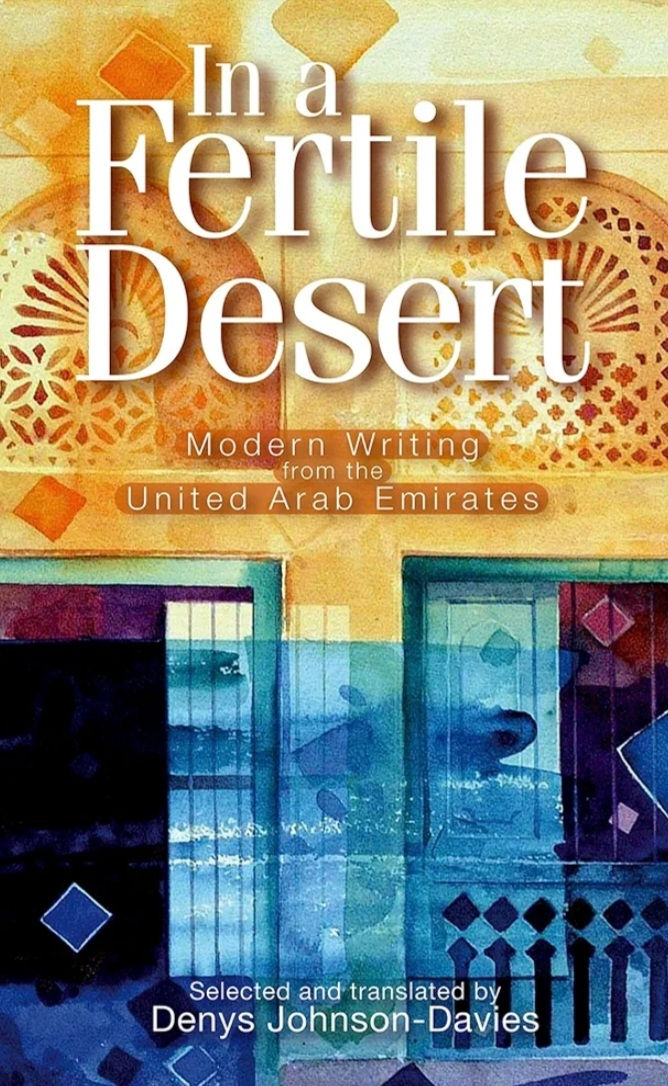
In addition to her literary work, Maryam Jumaa Faraj was also active as a translator, contributing to cultural exchange and fostering dialogue between different literary traditions. Through English translations, her literary voice reached an international audience. Several of her stories were included in anthologies of contemporary Emirati literature, most notably In a Fertile Desert: Modern Writing from the United Arab Emirates, ensuring that her work gained the recognition it deserved beyond the Arabic-speaking world.
More than three decades after the publication of her first collection, Maryam Jumaa Faraj continues to inspire new generations of writers, translators, researchers, and artists. Her legacy lives on not only through the works she left behind, but also through young Emirati women who, inspired by her example, are finding their own creative voices.
This very idea lies at the heart of contemporary artistic interpretations dedicated to her life and work—a dialogue between the past and the present, between the pioneers who opened new paths and the young women who continue their journey today. In this encounter between generations, literature becomes a bridge between memory and the future.
Cultural institutions, literary events, and research initiatives across the United Arab Emirates continue to preserve and celebrate the memory of Maryam Jumaa Faraj, reaffirming her status as one of the key figures of the Emirati literary landscape.
Seventy years after her birth, her work reminds us of literature’s power to transcend cultural boundaries, illuminate untold stories, and preserve human experience for future generations. Her voice continues to resonate today—in the stories being written, in the books being read, and in the young women who find inspiration in her legacy to tell stories of their own.


Comments